
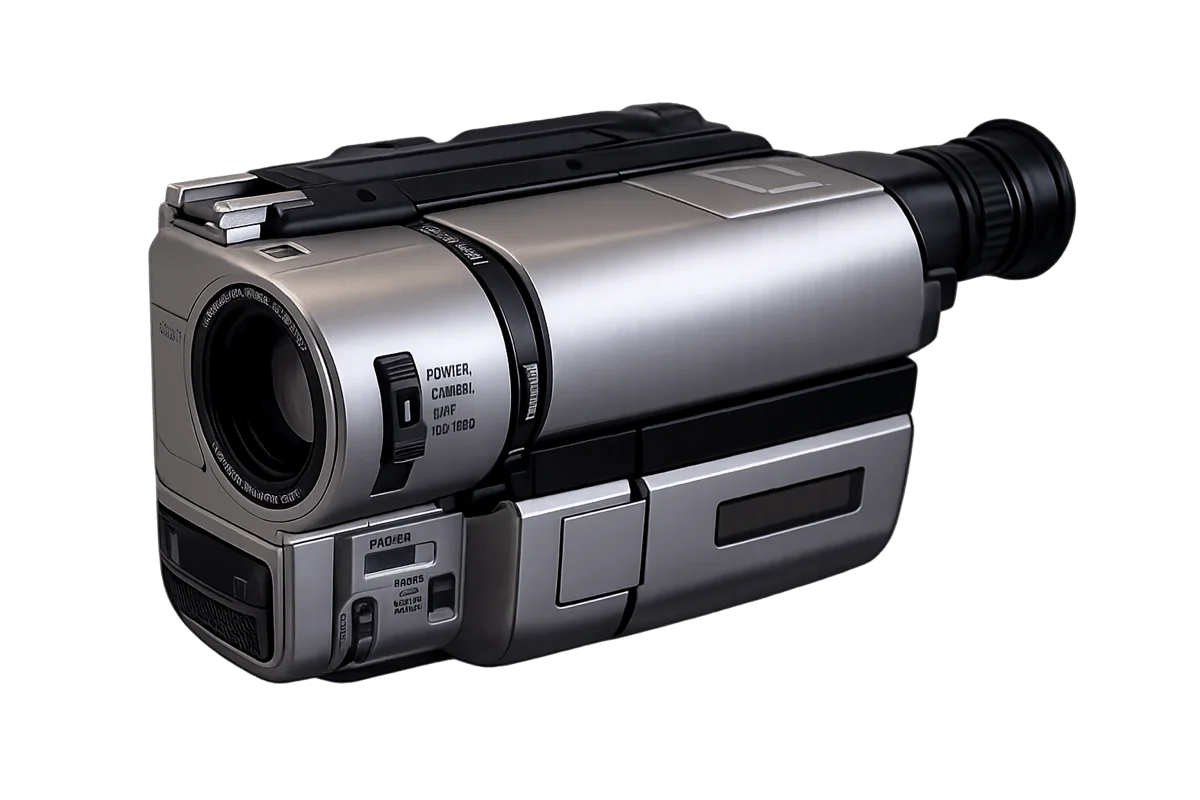
NS-8Hi8 camcorder
The NightShot camera.
- Reference
- Sony DCR-TRV / DCR-H20E-class Hi8 Handycam, late 1990s / early 2000s
- Format
- 16:9 HD default · 4:3 SD toggle
- Modes
- Photo · Video
- Video
- 30fps · 60s max clip
- Flash
- torch
- Pricing
- Free
What it simulates
- IR-weighted luminance — the NightShot signature that brightens warm scenes past true luminance
- Low-light AGC boost with authentic pump behaviour
- Tape-era chroma smear, dropout, and interlace comb
- Camcorder OSD burned in-signal — NIGHTSHOT wordmark, REC dot, timestamp, 14-segment HUD
- Video8 AFM audio — mono, 100-9000 Hz, wow-flutter, companded hiss that breathes
- AE drift and defocus pulse
How it behaves at capture
- Live in the viewfinder — the full look renders before the shutter
- Default 16:9 HD framing, toggle to 4:3 SD
- 3-state torch (continuous video lamp — no flash burst)
- Shader samples on a 540-wide grid so it reads Hi8, not HDV-in-green
- Both photo and video modes; video runs 30fps with a 60-second clip cap
What NS-8 is
NS-8 is the NightShot camera. Specifically, it's Afterhours' simulation of the Hi8 Handycam era — Sony DCR-TRV / DCR-H20E class — with the IR-weighted NightShot signature that made warm scenes brighten past true luminance and gave everything the specific green cast every home video from that era has.
The NightShot signature
The green isn't a filter applied over the picture. It's what the NightShot IR sensor did to the picture. Real Handycams from that era shipped an infrared mode that could see past visible-light exposure metering — warm scenes brightened past what the meter would have chosen, because the IR sensor responded to warm channels the visible-light path didn't. NS-8 models the same behaviour: shoot a warm interior and it lifts the shadows further than you'd expect; shoot a cool exterior and it doesn't. The look responds to the scene, not to a slider.
What runs live
Every artifact NS-8 models — the IR luma weighting, the AGC pumping, the tape-era chroma smear, the interlace comb, the OSD, the timestamp — renders live in the viewfinder before you press the shutter. What you frame is what you shoot. The overlay chrome (NIGHTSHOT wordmark, REC dot, 14-segment HUD) is soft-blurred so it inherits the pixel character of the format. It reads as burned into a Hi8 tape because it went through the same signal.
The hero footage
NS-8 is the camera behind the afterhourscamera.com hero video. Same shader, same IR-weighted luma. If you like the look on the landing page, that's the camera.
How to shoot with NS-8
- Point at warm scenes for the NightShot signature — interiors, tungsten, sodium street light, restaurant windows at night
- Use the 3-state torch to lift shadows further without triggering a flash burst
- 16:9 HD framing for cinematic width; 4:3 SD if you want the tape era harder
- Video mode is where NS-8 shines — pump and dropout artifacts are motion-dependent
See also HDV-2000 (MiniDV), VHS-83 (VHS-C), and DV-90 (MiniDV fisheye).
Frequently asked questions
Is NS-8 the camera behind the hero video on afterhourscamera.com?
Yes. The green cast in the hero footage is NS-8's IR-weighted luminance signature. Same shader, same camera — you can shoot the same look yourself in the app.
Why does NS-8 make warm scenes look brighter than they are?
That's the NightShot IR signature. Real Sony Handycams from that era used an infrared mode that could see past visible-light exposure metering. NS-8 models the same behaviour by weighting the luma channel toward the warm end, so warm interiors brighten past the exposure the iPhone would meter for.
Is NS-8 free?
Yes. NS-8 ships free with the app. No unlock required.
Can I shoot photos with NS-8, or is it video-only?
Both. NS-8 is video-first — the OSD and controls are camcorder-styled — but photo mode is available.
How is NS-8 different from HDV-2000?
NS-8 is Hi8 (SD, tape-era Handycam, NightShot IR); HDV-2000 is MiniDV (1080p HDV deck, cleaner signal). NS-8 leans into the low-light Sony DNA. HDV-2000 leans into the clean digital-tape look. They cover different corners of the same era.
Published by Afterhours Camera. Reviewed . Corrections and questions: bricksandcanvas@gmail.com.