
SUPER-8Super 8
Home movies, on film.
- Reference
- Kodak K40 Super 8 cine camera (Kodachrome 40 stock)
- Format
- 4:3 fixed (Super 8 native)
- Modes
- Video only
- Video
- 30fps · 60s max clip
- Flash
- none
- Pricing
- Paid in-app unlock
What it simulates
- Kodachrome-style K40 LUT
- Chunky grain (0.55) — matches Super 8's small frame area
- Signature warm halation (0.65)
- Vignette (0.42), softness (0.28)
- Crushed shadows (gamma 0.92), Kodachrome punch (saturation 0.95)
- Slight IR warmth (irMix 0.15) — projected film never showed true black
- Gate weave (0.35), shutter flicker (0.03), cue-dot overlays composited at export
- Kodak K40 magnetic-stripe fiction — mono 80-8000 Hz, dominant wow, hiss breath
- Optional projector-clatter sound bed
- Sprocket border baked into stills via the filmstrip compositor
How it behaves at capture
- Video only — no photo mode
- Fixed 4:3 framing — Super 8 never shot 16:9
- Device captures 30fps; effective cadence is filmMotion.fps (default 18) — real Super 8 cine speed
- No flash — the real camera had no light; the bolt is hidden
- Boot: 3-2-1 academy countdown with leader-beep SFX
- Tail: 2-3 light-struck orange flash frames → black — the frame in the gate overexposes as the transport stops
- Frame button plucks a filmstrip still — the sprocket border is part of the export
What SUPER-8 is
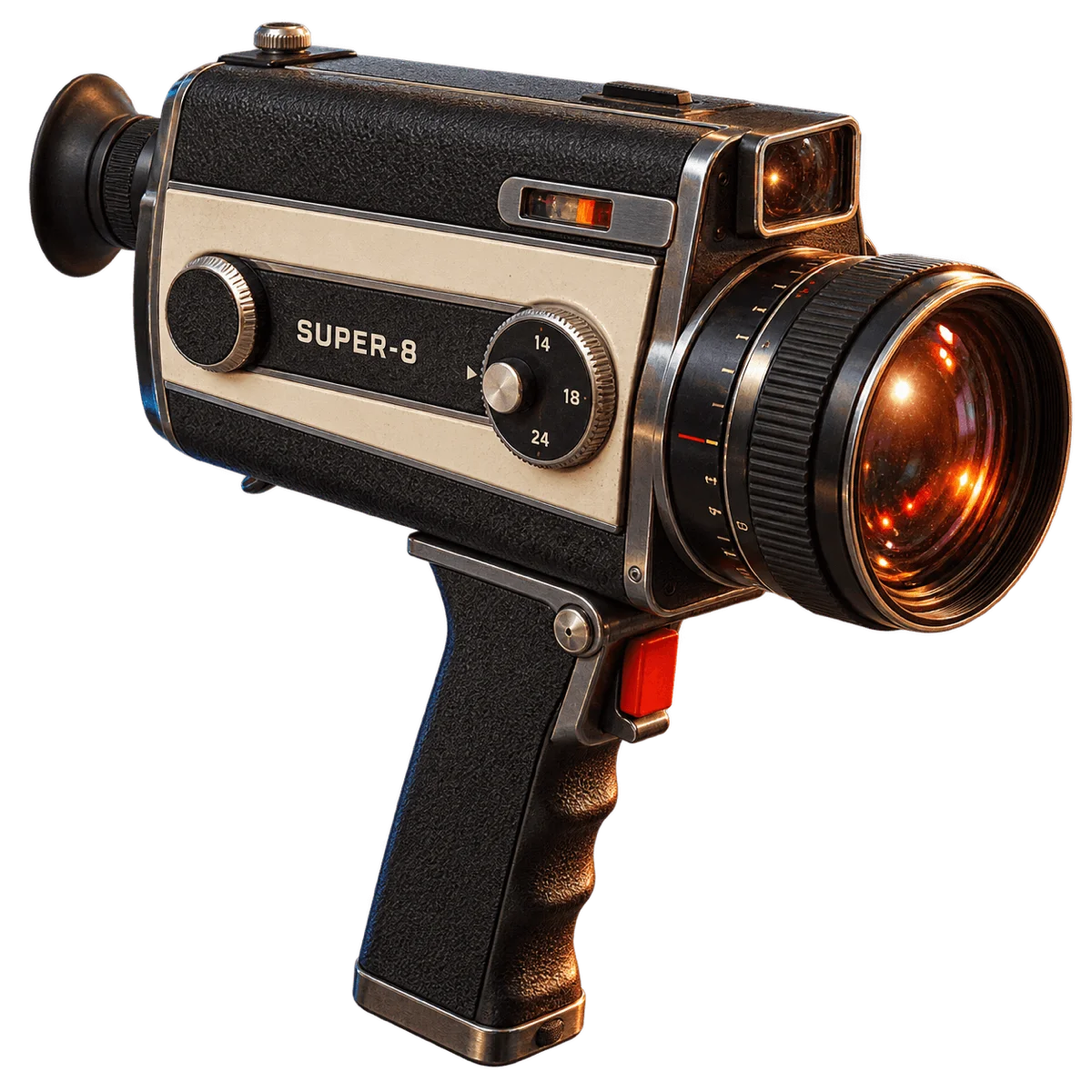
SUPER-8 is a Kodak K40 Super 8 home-movie camera. Same cine cadence as the real 1970s-2000s consumer camera (18fps default), same Kodachrome grade, same chunky grain that comes with a small frame area, same warm halation and gate weave, same lack of a built-in flash because the real camera didn't have one.
Cine motion, not photo motion
Super 8 ran at 18fps, not 24 or 30. The transport was designed to stretch a 50-foot cartridge into a 3.5-minute home movie, and the resulting cadence — slightly jerky, warm, slightly weaving in the gate — is what "home movie" means to everyone who grew up watching one. SUPER-8's filmMotion stage lives on top of a 30fps device capture and renders that cadence live. Gate weave 0.35, shutter flicker 0.03.
Bookends
Every real Super 8 clip started with the black-and-white academy leader ("3, 2, 1…") and ended with the transport pulling the last frame past the gate — over-exposing it into a light-struck orange flash, then black. SUPER-8 preserves both. The boot animation plays a leader countdown with the standard 1kHz beep. The tail appends 2-3 orange flash frames to every video export, continuing the timeline after your last user frame. Same writer, same file.
Frame stills through the filmstrip
Hitting the frame button doesn't route to the normal photo pipeline. It plucks a still from the cine track and renders it through a sprocket-filmstrip compositor — the sprocket holes, the dust, the specific way projected film prints look. The border is part of the exported PNG.
See also POLAROID-90 (instant film), SNAP-27 (35mm disposable), and the Camera Simulation vs Filters argument.
Frequently asked questions
Why is the default frame rate 18fps and not 24 or 30?
Because Super 8 ran at 18fps. Consumer Super 8 cameras used 18fps as the standard cine speed to save film — Kodak's home-movie market priced film in 50-foot cartridges, and 18fps stretched a cartridge to about 3.5 minutes instead of 2.5. SUPER-8 reflects the era's real cadence.
What happens when I stop recording?
You get a tail. 2-3 light-struck orange flash frames fade to black — the frame in the gate overexposes as the transport stops. It's a real Super 8 artifact, appended after your last user frame and continuing the export's timeline. First the countdown, then your footage, then the tail.
Can I take a still from a SUPER-8 clip?
Yes. The frame button plucks a filmstrip still — rendered through the sprocket-filmstrip compositor, not the plain photo pipeline. The sprocket border is part of the export file.
Is SUPER-8 free?
No. SUPER-8 is a paid in-app unlock.
Published by Afterhours Camera. Reviewed . Corrections and questions: bricksandcanvas@gmail.com.